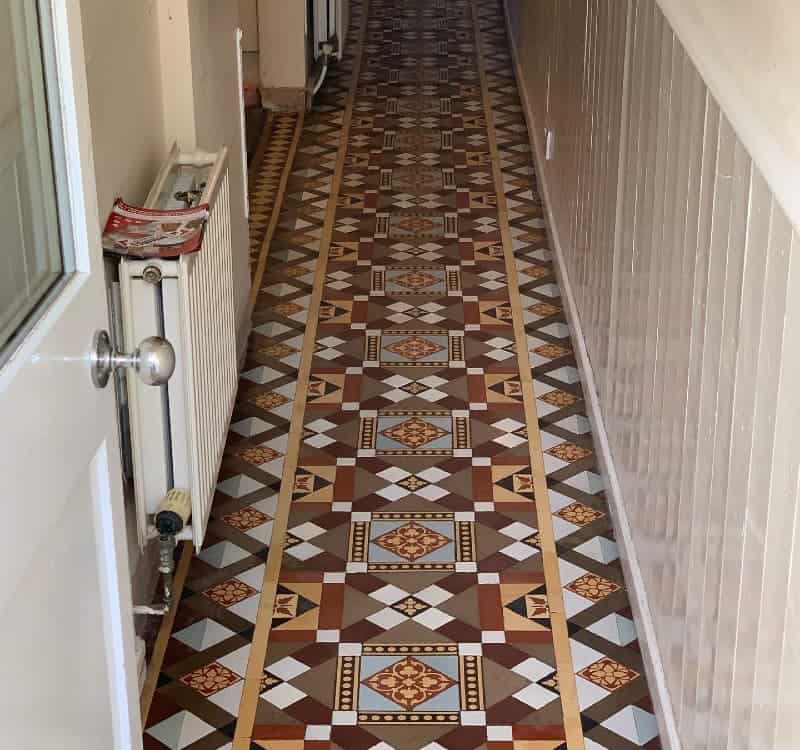
01 — Heritage / Residential
Victorian Tiled Hallway
- Location
- Nottinghamshire
- Material
- Encaustic tile
A geometric encaustic tiled hallway cleaned, repaired and sealed to bring the pattern back.

Victorian & Minton Tile Restoration
Careful cleaning and sympathetic repairs for Victorian geometric, encaustic and Minton-style hallways, including missing tiles and historic adhesive residue.
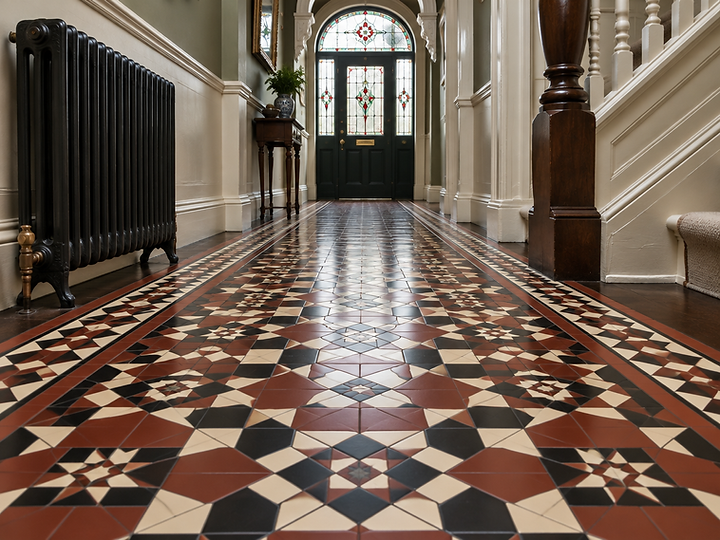
A Victorian hallway is often one of the most striking original features in a period property. Geometric patterns, borders and encaustic colours can remain beneath carpets, old adhesive or later alterations for decades. The right restoration aims to uncover that character without causing new damage.
Hemmings has experience with period tiled floors, including a Birmingham Minton-style hallway where sections had been cut away and needed careful reconstruction.
Many older floors have loose tiles, broken edges, missing shapes, stubborn residue or uneven repairs. The pattern may be partly obscured by a bituminous adhesive or a cement repair. It is important to establish what is original, what has been replaced and whether moisture or movement is affecting the floor.
Removing a covering is not automatically a simple cleaning job. A small trial area and appropriate survey can establish the extent of the work before more tiles are disturbed.
Traditional encaustic tiles have colour in the body of the tile, rather than relying on a modern printed surface. Even so, aggressive acids, inappropriate abrasives and uncontrolled cleaning can damage historic material, grout or borders.
Products and methods are selected for the floor's condition and tested before wider use. The goal is to remove suitable dirt and residues while preserving as much of the original finish as practical.
Where part of the geometric design has been lost, replacement requires more than finding a tile of roughly the same colour. Dimensions, thickness, pattern alignment and the way the original tiles have aged all affect the result.
Suitable reclaimed pieces are sometimes available; reproduction products may be more realistic for particular patterns. A new tile may initially look different from a century-old neighbour, and that should be explained before work starts.
The original Hemmings case study describes a Victorian tiled hallway with a concrete channel running through part of the floor. The team surveyed and measured the missing area, identified the shapes required and allowed for the possibility of breakage during removal.
That preparation matters because lifting damaged cement or loose tiles can expose further repair needs. Patterns must be set out with care so the restored geometry reads as a whole.
Not every historic tiled floor should receive the same sealer. Older construction may behave differently from a modern floor with a damp-proof membrane. Treatments must suit the tiles, subfloor and any ongoing moisture movement; an inappropriate coating may cause problems rather than solve them.
Use suitable cleaners, remove grit regularly and avoid saturating the floor. If tiles become loose, or damp marks develop, investigate the underlying cause before applying more product.
Share photographs of the full pattern, the borders and any missing sections, along with the approximate dimensions and postcode. A site survey can establish what can be cleaned and what needs repair.
A geometric encaustic tiled hallway cleaned, repaired and sealed to bring the pattern back.
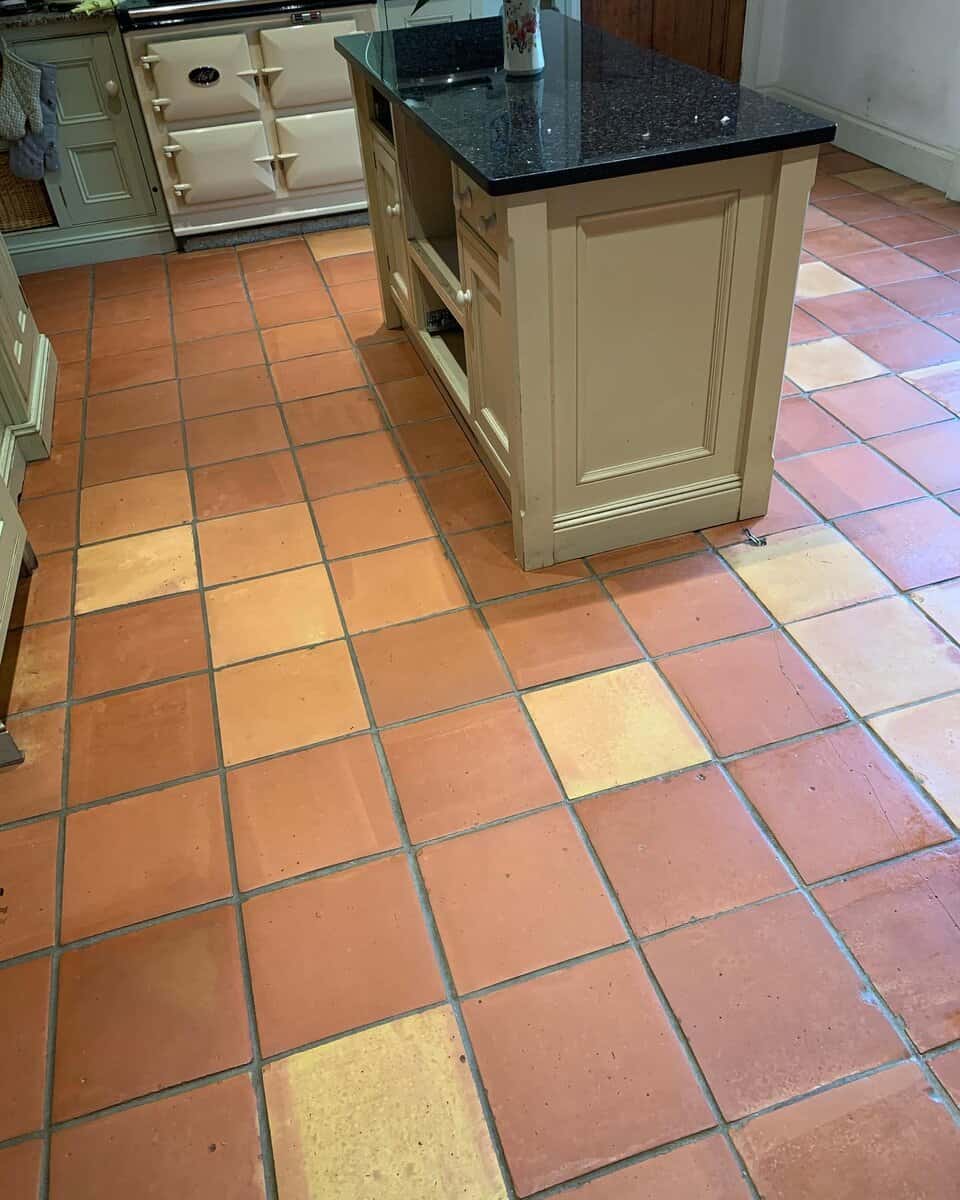
Practical guidance for cleaning and protecting terracotta tiles without damaging their porous clay surface or covering up moisture problems.
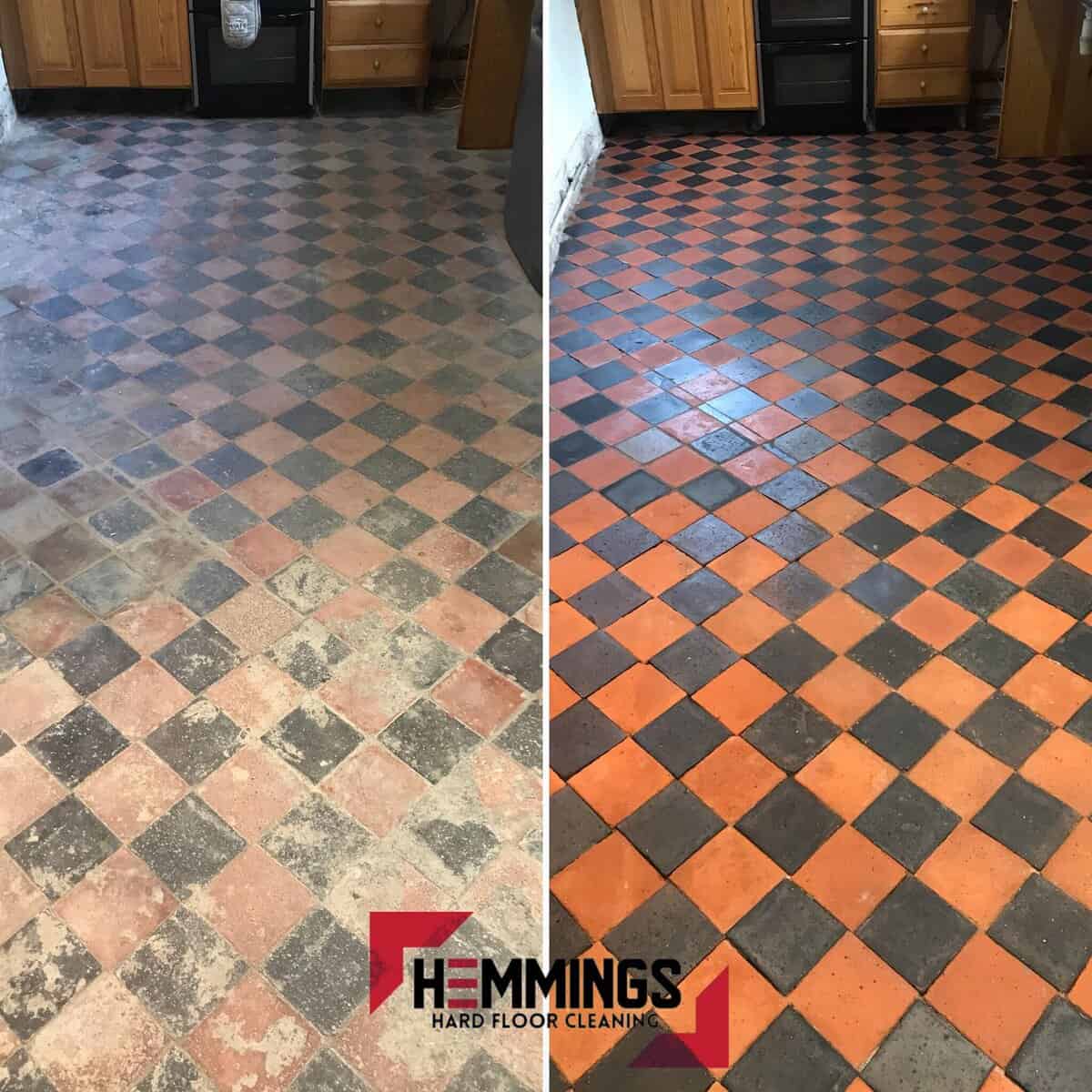
A guide to restoring porous quarry tiled floors, from removing worn coatings and grime to choosing natural or colour-enhancing protection.

Practical corrections to common assumptions about stone sealing, acidic cleaners, steam cleaning and replacing worn floors.
Send us photographs, approximate measurements and a postcode. We can discuss the next steps and whether an assessment is needed.