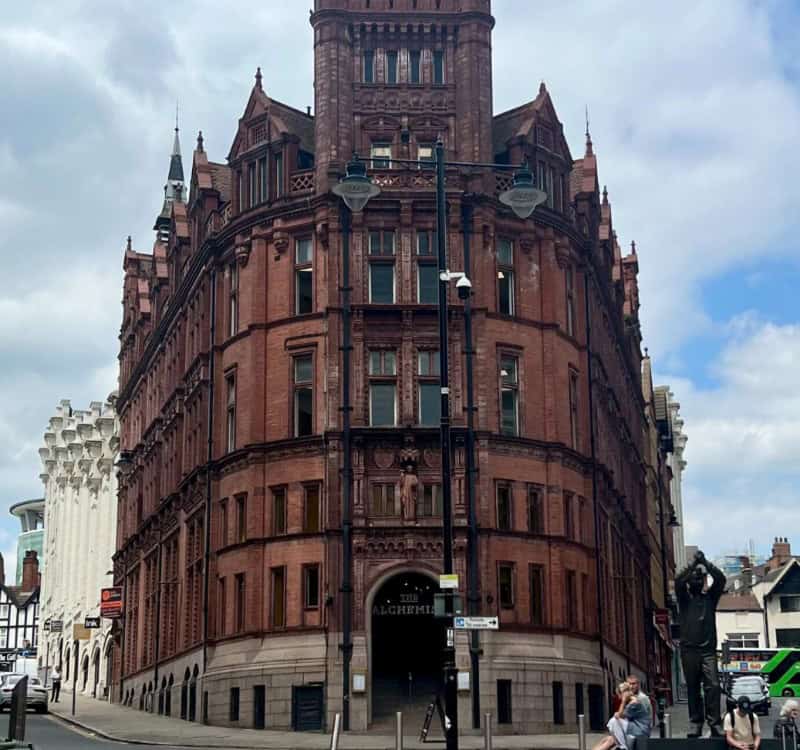
01 — Heritage / Commercial
Prudential Assurance Building
- Location
- Nottingham
- Material
- Parquet & stone
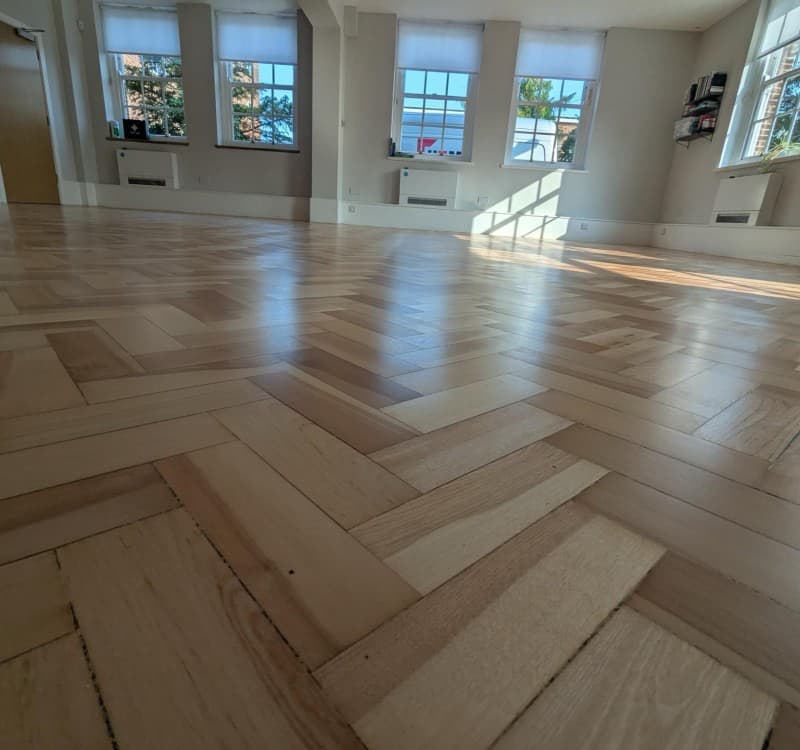
Work carried out within a Grade II listed Nottingham landmark.

Parquet Restoration
Specialist assessment, repairs, careful sanding and finishing for herringbone and other parquet patterns, including relaying blocks where a restoration needs it.
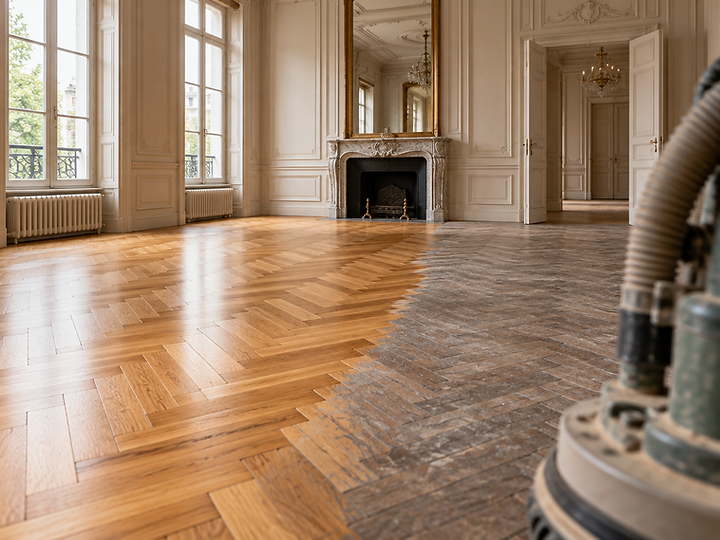
Parquet has a rhythm that ordinary straight-laid boards do not. Herringbone, chevron, mosaic and basket-weave patterns depend on the position of every block, so restoration needs careful assessment before the sanders come out.
Hemmings works with both older parquet floors and newer patterned timber, including floors uncovered beneath carpets or later coverings. Whether the job involves securing a few blocks, restoring an entire hallway or assessing a new installation, the method must respect the pattern and the substrate.
Sometimes an original floor is in better condition than expected; in other cases it may have been damaged by carpet grippers, adhesive, damp or previous alterations. A small, carefully managed inspection can reveal whether the blocks are securely bonded, whether the floor is level and how much original material remains.
Hemmings has previously restored a Nottingham parquet hallway without replacing the entire floor, alongside more complex heritage floors requiring careful preparation and repair.
Loose or hollow blocks need investigating before surface refinishing. Causes can include failure of old adhesive, subfloor movement, moisture or previous repairs. Matching reclaimed blocks may be suitable for some areas; new replacements must be chosen with attention to dimensions, species and pattern.
Repair work should preserve the geometry of the floor. A mismatched block in the centre of a herringbone pattern can be more noticeable than a small amount of historic wear.
Parquet blocks run in different grain directions across the same floor. Appropriate machinery and abrasive stages help produce an even surface without damaging corners or emphasising changes in block direction.
The finish may be a natural-looking oil or a lacquer, depending on the timber, traffic, maintenance preference and design. A sample area helps demonstrate the colour and sheen before a final decision.
Some restoration projects need a small area of parquet blocks to be relaid or matched to the existing pattern. In those cases, the team checks the subfloor, moisture conditions, dimensions and adhesive before the repair. This is offered where it supports a wider restoration project, rather than as a standalone new-floor fitting service.
Original blocks can have historic character that should not automatically be sanded away. Period floors, particularly in older or listed properties, may require a more conservative approach and additional permissions depending on the work.
After restoration, grit control, suitable cleaning and a finish-specific maintenance plan help preserve the surface. Avoid soaking joints or assuming an oiled floor can be cleaned like ceramic tile.
Photographs of the overall pattern, close-ups of damaged areas and the approximate room dimensions are useful when requesting an initial assessment.
Work carried out within a Grade II listed Nottingham landmark.
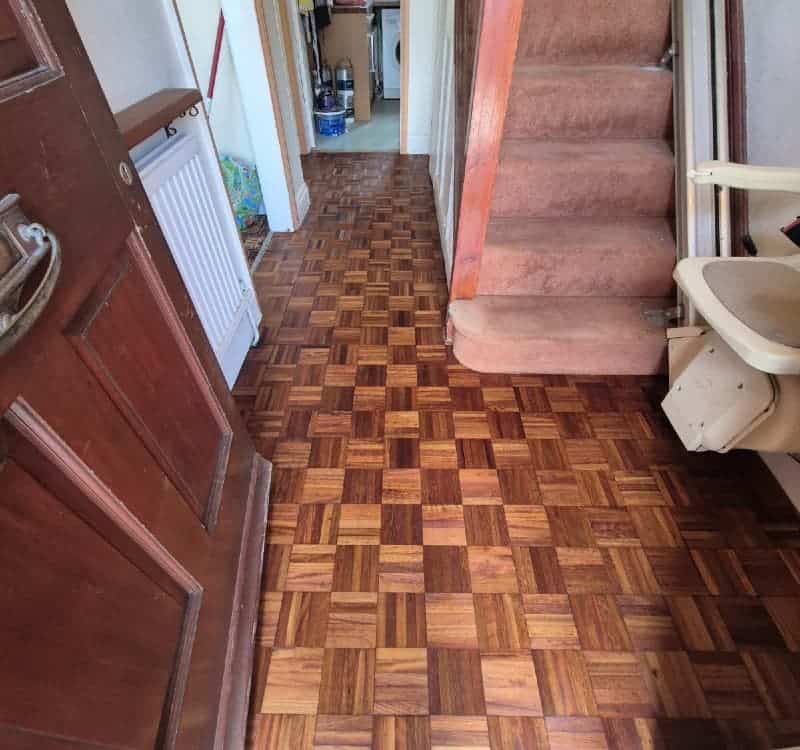
A worn parquet hallway with faded, scratched blocks brought back with careful repair and a restrained finish.
How Hemmings renewed a scratched, faded Nottingham parquet hallway with sanding and an oil finish, preserving the existing timber blocks.
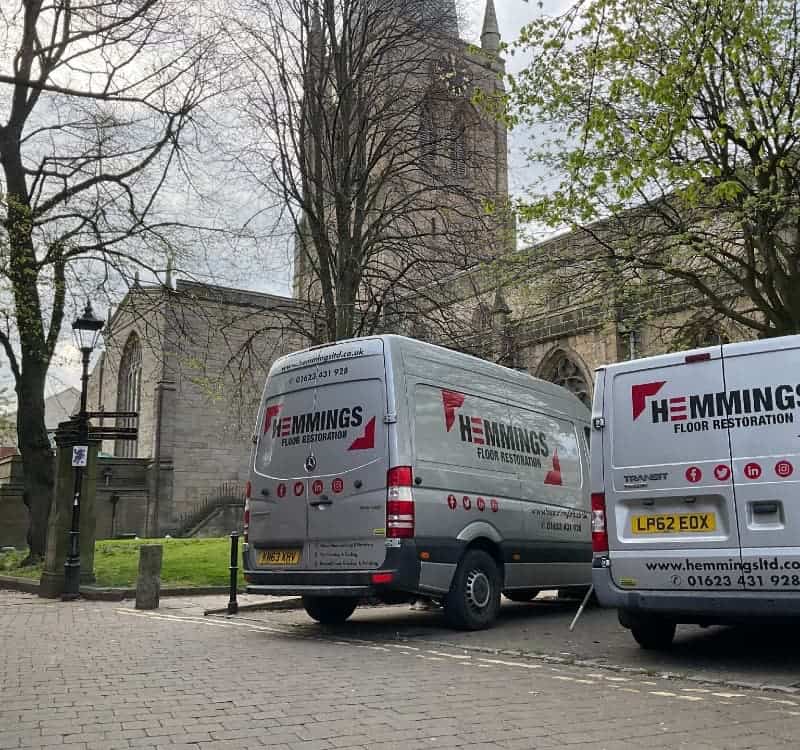
A look back at the Hemmings team introduced in 2025, including the people involved in customer enquiries and restoration work at that time.
An accessible comparison of single-component and two-component lacquers, including traffic, mixing, appearance and maintenance considerations.
Send us photographs, approximate measurements and a postcode. We can discuss the next steps and whether an assessment is needed.