Tile restoration advice13 November 2026
Ceramic Tile and Grout Cleaning: Professional Restoration Options
What professional ceramic tile cleaning can improve, how to treat stained grout and when sealing or replacement may be more appropriate.

How professional travertine floor restoration can address soil, small voids, worn finishes and suitable polishing or sealing treatments.
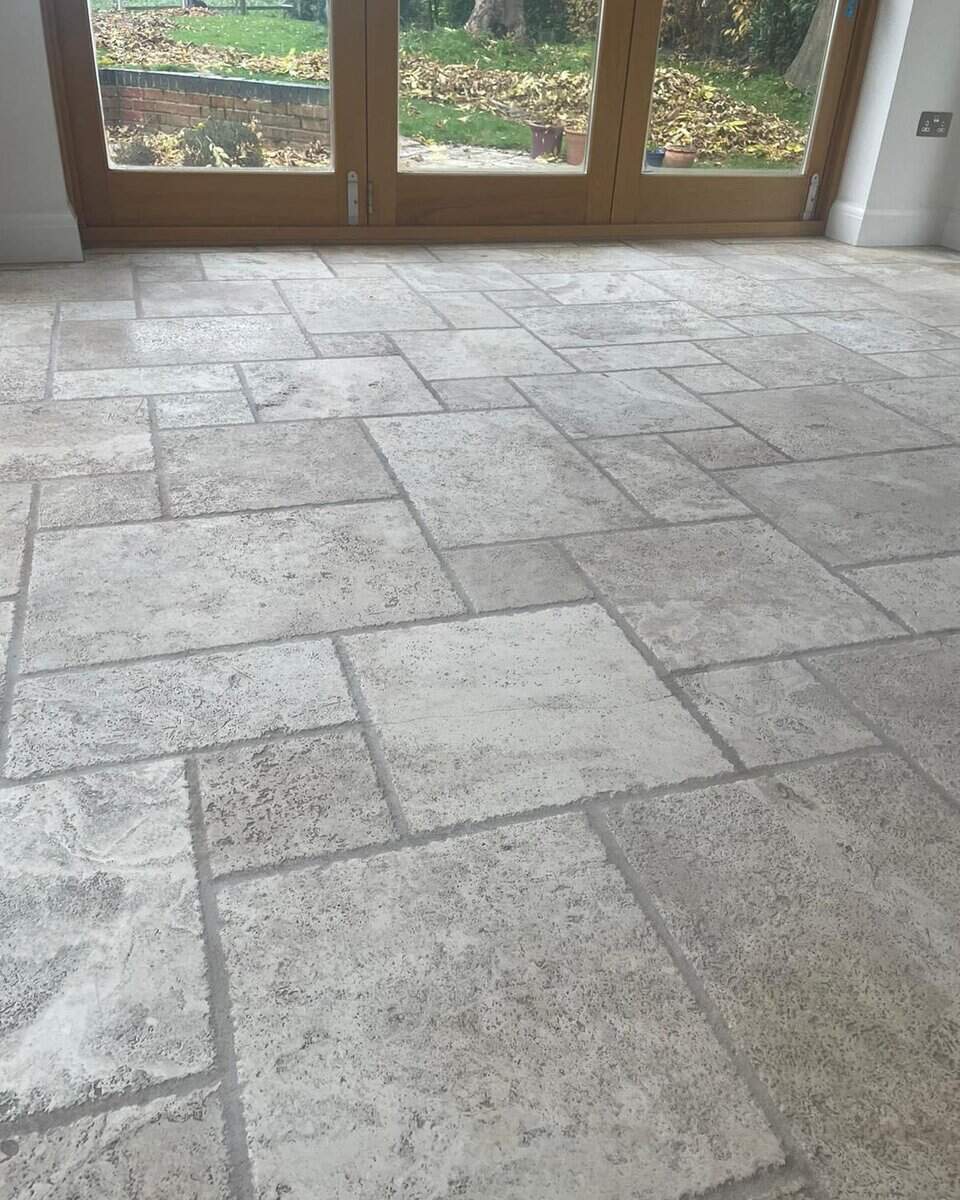
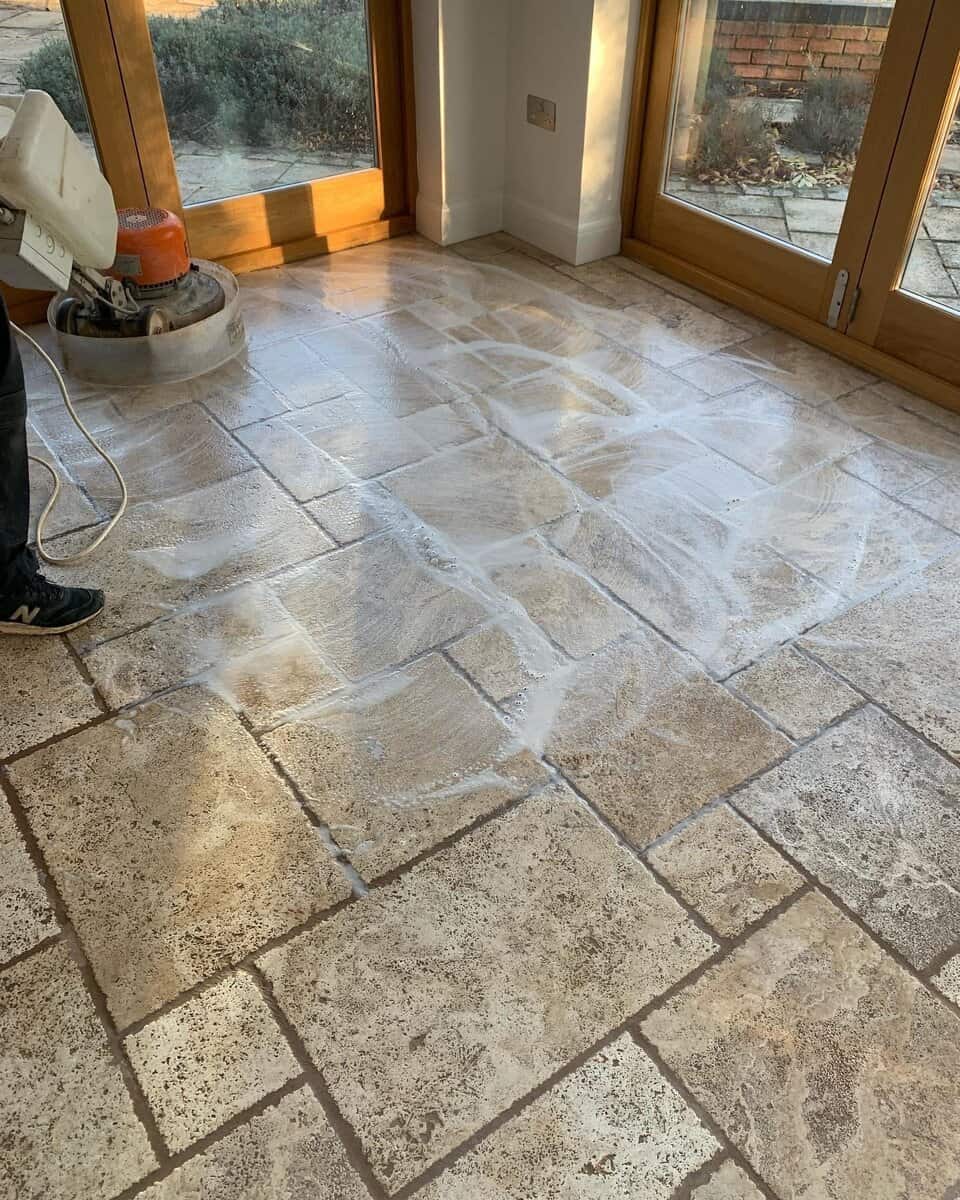
Travertine is a form of limestone with distinctive natural variation and, in many tiles, visible cavities. Over time the floor may gather dirt in the texture, lose its sheen or develop marks from unsuitable cleaning. Restoration methods may include suitable deep cleaning, compatible filling, polishing, sealing and, where appropriate, mechanical refinement.
Travertine is a calcium-based natural stone and can be sensitive to acidic products. It may contain open or previously filled voids that trap soil or become more noticeable with wear. Natural variation in the stone remains part of its appearance, even after professional restoration.
A survey checks the stone's surface finish, grout, previous coatings, loose tiles, stains and the condition of any void fillers. The material may need a suitable deep clean rather than sanding or a harsh chemical strip.
Where wear or acid etching affects the stone surface, honing and polishing may be appropriate. Mechanical grinding to reduce lippage is more involved and needs assessment of the tile and installation.
Small voids can sometimes be filled with compatible materials selected for the floor's colour and finish. These repairs may remain visible, especially on a naturally varied stone. Loose or cracked tiles and substantial movement need investigating before cosmetic work.
Some homeowners want a glossy result, while others prefer a matt or honed finish that complements the stone's texture. The appropriate method depends on the original tile, room use and maintenance needs. Sample areas help avoid surprises.
Travertine can absorb liquids, so a compatible sealer may be appropriate. A sealer does not make the floor waterproof and will not prevent acid etching. It needs to suit any existing finish and the floor's moisture conditions.
Remove grit regularly, clean with products suitable for calcium-based stone and avoid acidic household cleaners. Keep records of any filler or sealer used, so future maintenance is compatible.
Take photographs showing the overall surface, damaged holes or grout, and any etched or dull areas. Share the approximate measurements and postcode.
What professional ceramic tile cleaning can improve, how to treat stained grout and when sealing or replacement may be more appropriate.
When granite floor cleaning, surface polishing or local repairs may help, and why even a hard stone is not completely immune to damage.
An introduction to assessing dark basalt floors, choosing appropriate cleaning or honing methods and protecting the finish without overpromising results.
Photographs, approximate measurements and a postcode are enough for us to give you an initial view.