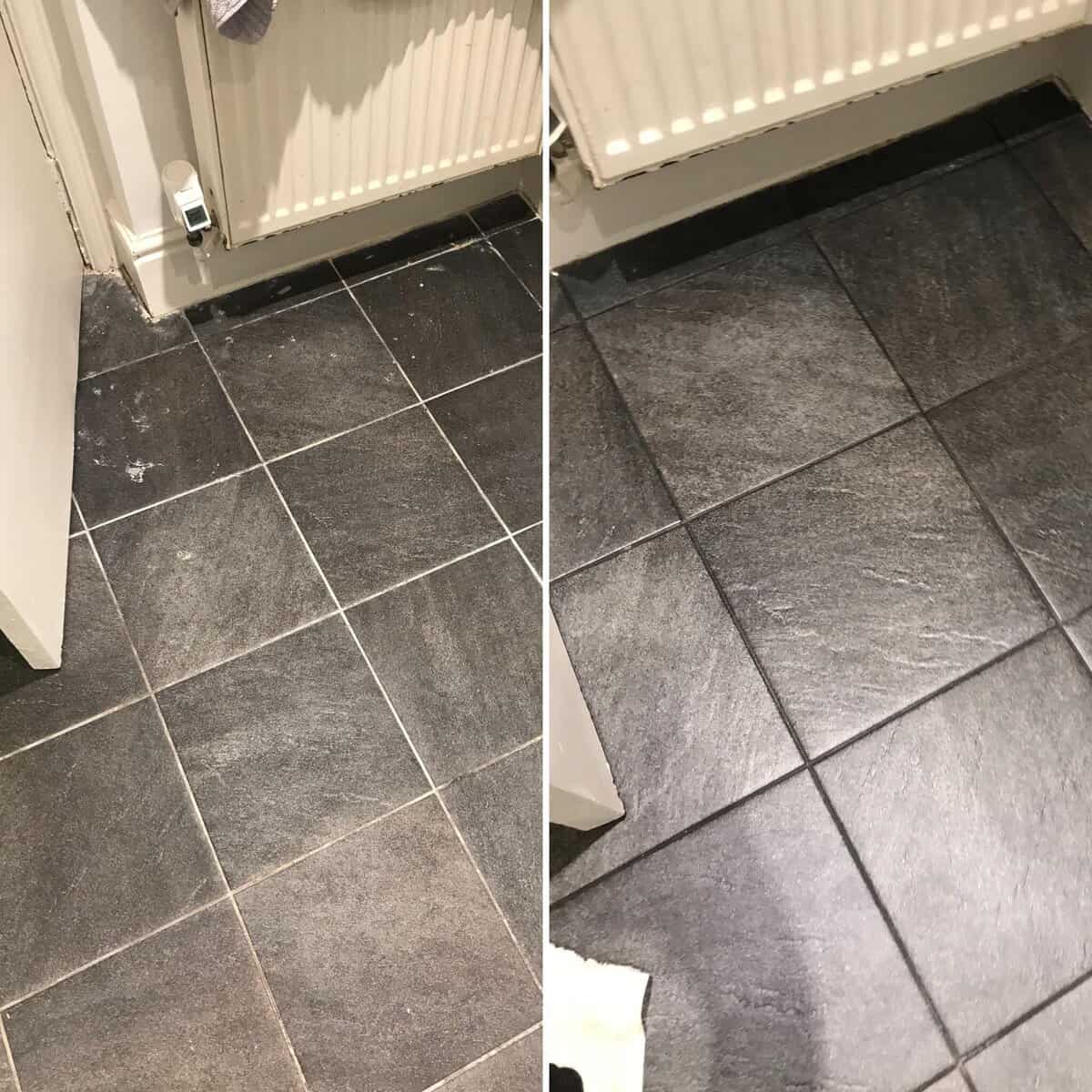
Tile restoration advice13 November 2026
Ceramic Tile and Grout Cleaning: Professional Restoration Options
What professional ceramic tile cleaning can improve, how to treat stained grout and when sealing or replacement may be more appropriate.

How to recognise limestone wear, acid etching and old sealer residue—and what professional grinding, honing or polishing can realistically achieve.
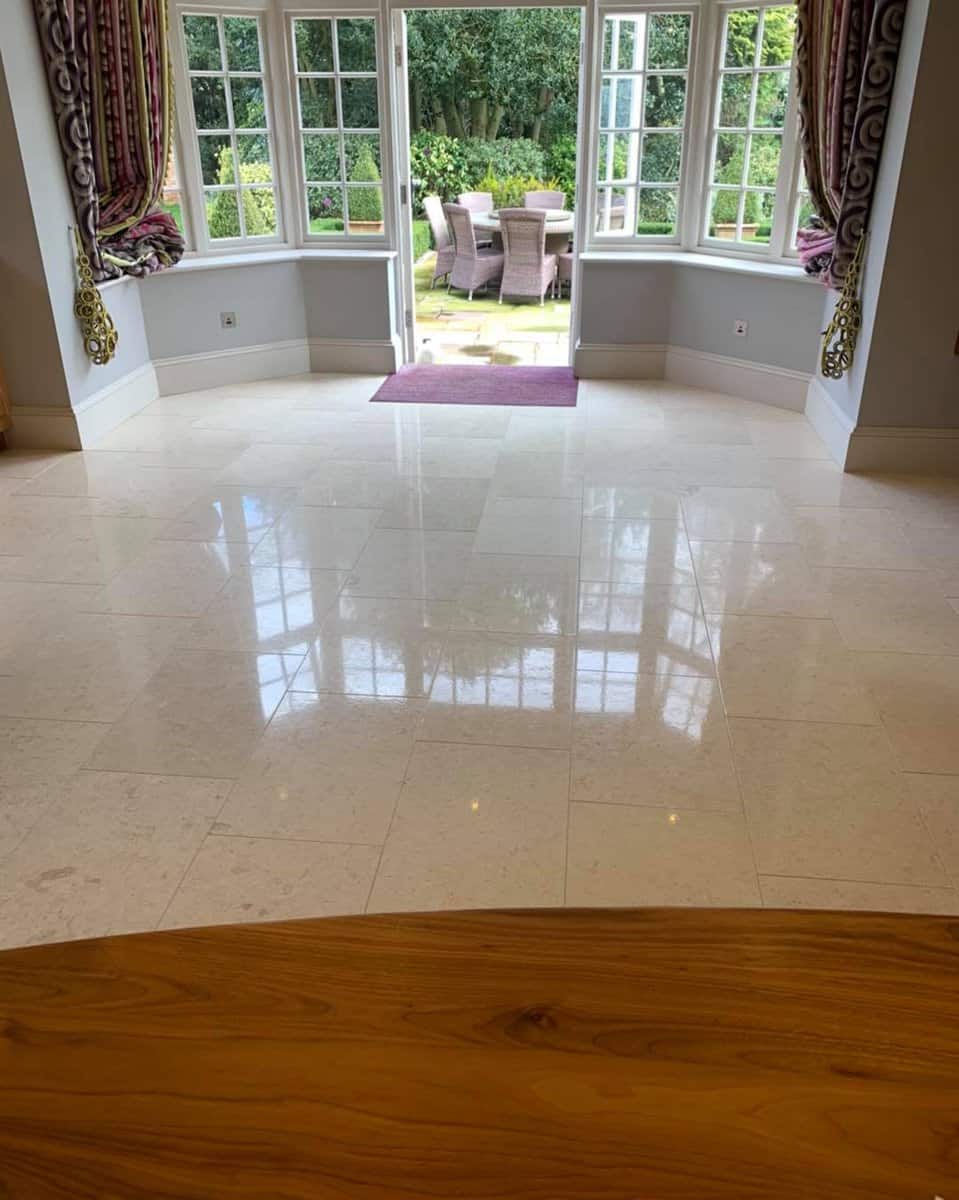
Limestone can create a warm, natural floor, but it needs care suited to a calcium-based stone. Over time, everyday grit, heavy traffic, unsuitable cleaners and spills can leave a surface dull, patchy or etched. Depending on the stone, potential treatments include compatible deep cleaning, surface refinement, polishing and sealing.
Limestone is often porous, so some liquids can penetrate and leave marks. Acidic spills, including wine and certain cleaning products, may react with the stone and create pale or dull etch marks. That is different from a removable layer of dirt, and treating both problems with a stronger cleaning solution can make matters worse.
Uneven tile edges, known as lippage, may also be noticeable. Whether these can be reduced safely depends on the tiles, grout, installation and remaining thickness.
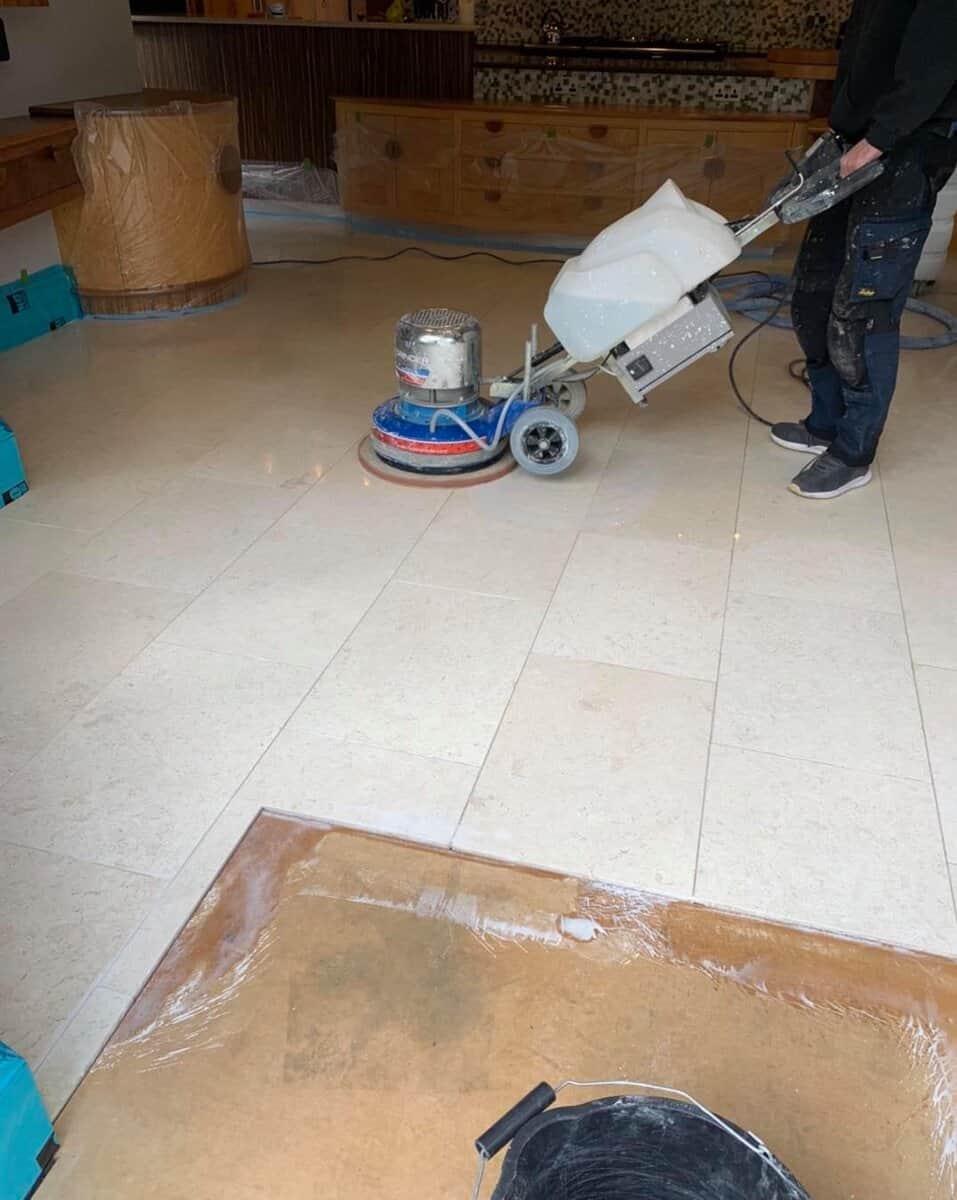
A specialist starts by identifying the finish and checking old coatings, staining, grout and the stone's condition. A compatible deep clean can remove suitable soil and residues. Where genuine surface damage is present, controlled honing or polishing may be considered to restore a more even appearance. On some floors, mechanical grinding can address limited unevenness, but it is not an automatic step for every limestone installation.
The original Hemmings service page also mentions stripping old sealers. That should only be attempted after checking what product is present and whether removal will harm the floor.
An appropriate impregnating sealer can help slow the absorption of certain spills on porous stone. It does not make limestone waterproof or prevent chemical etching. A test area should show the likely appearance, and the specification needs to consider whether the floor is already treated.
Some etching and surface wear can be improved significantly, but deep stains, fractures or previous repairs may remain visible. A useful survey explains those limitations up front, along with access and any curing periods.
Use a suitable pH-neutral stone cleaner, remove grit frequently and blot acidic spills promptly. Avoid vinegar or general-purpose descalers, which may attack the stone surface. Follow the product-specific instructions given after the restoration.
Photographs showing the whole room and a close-up of dull areas, stains or raised edges help the team understand the problem. Include the approximate area, whether the floor is indoors or outside and the postcode.
What professional ceramic tile cleaning can improve, how to treat stained grout and when sealing or replacement may be more appropriate.
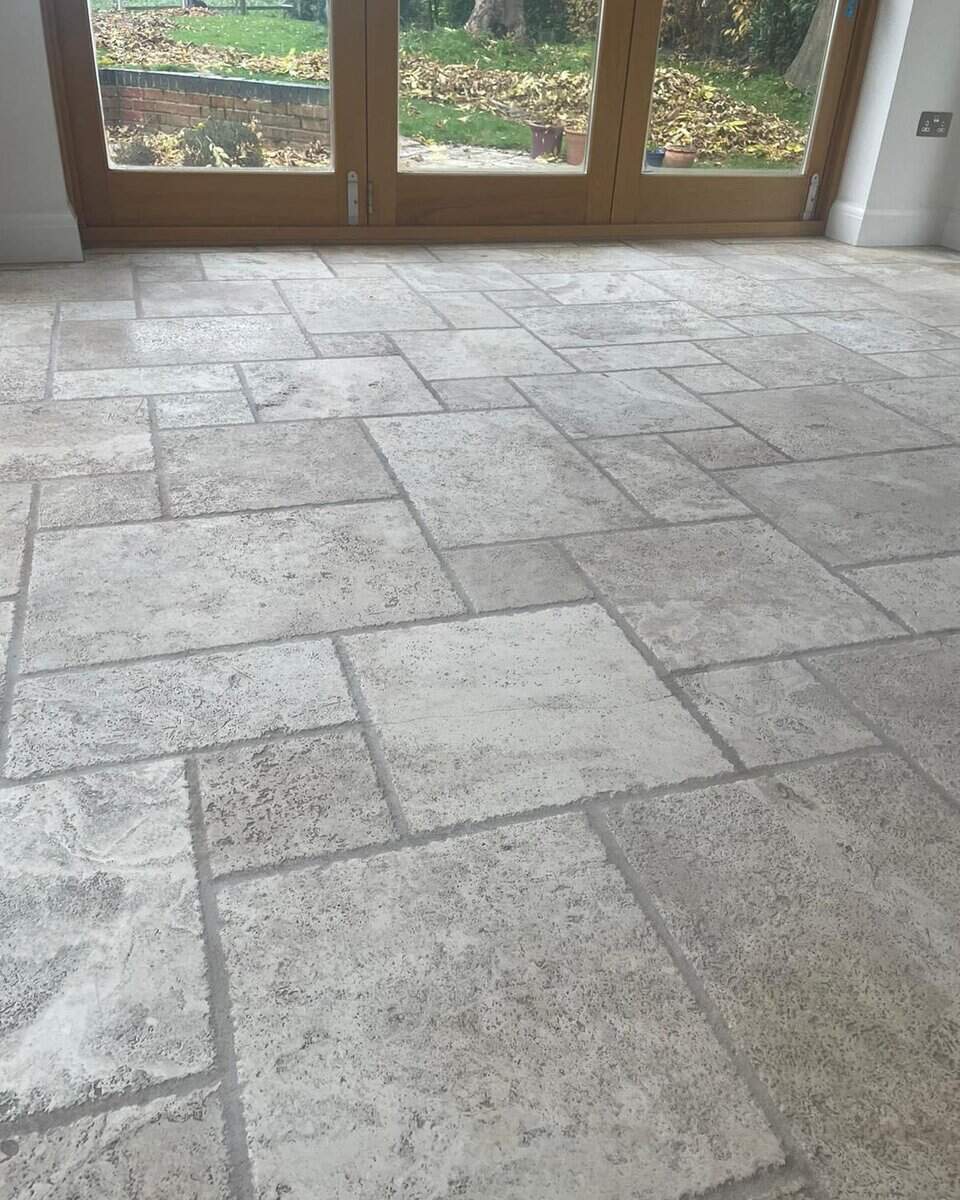
How professional travertine floor restoration can address soil, small voids, worn finishes and suitable polishing or sealing treatments.
When granite floor cleaning, surface polishing or local repairs may help, and why even a hard stone is not completely immune to damage.
Photographs, approximate measurements and a postcode are enough for us to give you an initial view.